Does Kombucha Have Alcohol? What Alcohol Percentage Is Kombucha?
Does Kombucha Contain Alcohol? The Truth About Kombucha ABV
Does Kombucha Have Alcohol?
Kombucha, a fizzy and tangy fermented tea, is celebrated for its health benefits and distinctive taste. But it does contain a small amount of alcohol — a natural result of how it's made. This often raises questions:
- Is kombucha alcoholic?
- How much alcohol is in kombucha?
- What is kombucha's ABV compared to other drinks?
- Can you drive after drinking kombucha?
- Is it safe during pregnancy?
- Can you get drunk from kombucha?
Let's work through each of these and explain the science behind them.
Why Does Kombucha Contain Alcohol?
Fermentation is at the heart of kombucha's production — and alcohol is a natural by-product of that process. Here's how it works:
The role of sugar and yeast. Yeast in the kombucha culture feeds on sugar, converting it into alcohol and carbon dioxide. This is what gives kombucha its natural effervescence.
The SCOBY's unique function. Kombucha is made using a SCOBY (Symbiotic Culture of Bacteria and Yeast). The bacteria in the SCOBY consume much of the alcohol produced by the yeast and convert it into acetic acid — the source of kombucha's signature tangy flavour.
Key factors that influence alcohol levels:
- Fermentation time — longer fermentation can lead to higher alcohol content
- Sugar content — more sugar provides more fuel for the yeast
- Yeast activity — a more active culture can produce a stronger brew
Because of this natural process, any authentically brewed kombucha will contain at least a trace of alcohol.
How Much Alcohol Does Kombucha Have? (ABV Comparison)
Commercially produced kombucha is carefully brewed and monitored to keep alcohol levels below 0.5% ABV. This is the threshold used under UK law to classify a drink as non-alcoholic.
To put that in context, here's how kombucha's ABV compares to other common drinks:
| Drink | Typical ABV |
|---|---|
| Kombucha (commercial) | 0.1–0.5% |
| Ripe banana | ~0.4% |
| Orange juice (fresh) | ~0.5% |
| Low-alcohol beer | 0.5–1.2% |
| Standard lager | 4–5% |
| Wine | 11–14% |
As you can see, commercial kombucha sits at the very bottom of that scale — closer to a glass of orange juice than to any alcoholic drink.
Homemade kombucha is a different matter. Without close monitoring, homebrews can sometimes reach 2–3% ABV, which is closer to a light beer. This is why many people prefer commercially produced kombucha if they want to be confident about alcohol content.
Can You Drive After Drinking Kombucha?
Yes — commercial kombucha is safe to drink before driving. Here's why.
In the UK, the legal drink-drive limit is 80mg of alcohol per 100ml of blood. To reach even a fraction of that limit from kombucha, you would need to consume an implausible volume in a very short space of time. Commercial kombucha contains less than 0.5% ABV — the same threshold used to classify drinks as non-alcoholic under UK law — and your body metabolises even that trace amount faster than it accumulates.
To put it in concrete terms: a standard 330ml bottle of kombucha contains roughly the same amount of alcohol as a ripe banana. Neither is going to affect your ability to drive.
There are a couple of caveats worth knowing:
Homemade kombucha is different. Without controlled fermentation and accurate testing, homebrew can reach 2–3% ABV — genuinely closer to a light beer. If you're drinking homemade kombucha, the same caution applies as with any alcoholic drink.
Breathalyser sensitivity. In very rare cases, consuming kombucha immediately before a breathalyser test — within a minute or two — could produce a trace reading due to residual alcohol in the mouth. This dissipates almost instantly and would not reflect blood alcohol levels, but it's worth being aware of if you're in a situation where you might be tested.
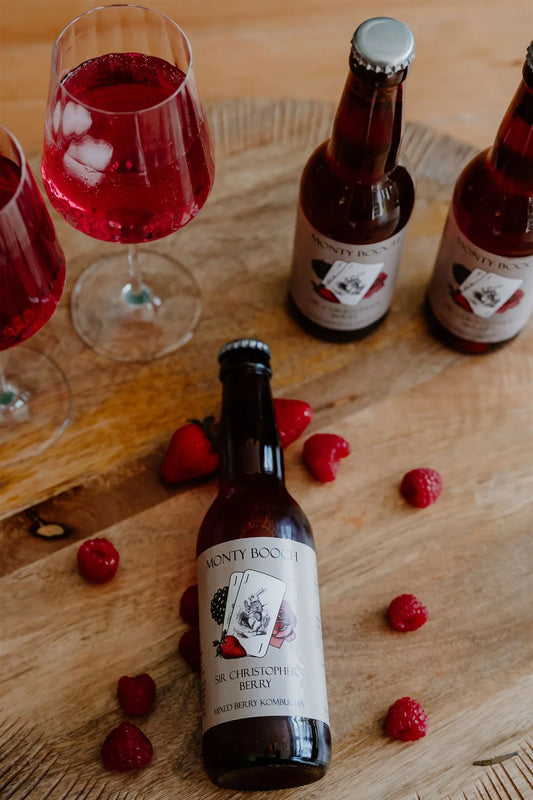
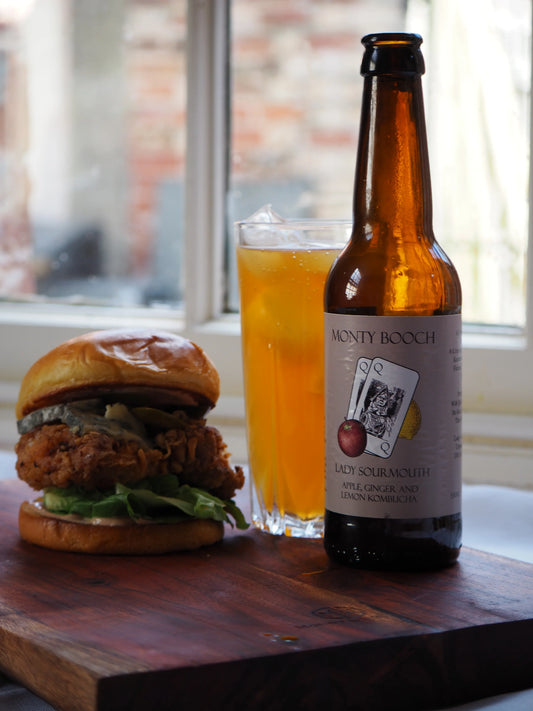
For commercially produced kombucha like Monty Booch, the answer is straightforward: it's non-alcoholic by legal definition and won't affect your driving.
Can Kombucha Get You Drunk?
No — not under normal circumstances. The trace alcohol in commercial kombucha is far too minimal to have any intoxicating effect.
To put it in perspective, you would need to drink more than 40 bottles of kombucha in a single sitting to equal the alcohol in one pint of beer. Rather than a buzz, kombucha offers genuinely useful benefits:
- Probiotics — thought to promote gut health and support digestion
- Antioxidants — help fight free radicals in the body
- Acetic acid — provides energy to muscles and other tissues
- Caffeine — a mild amount from the tea base for a gentle lift, though this can influence the best time to drink kombucha for you
Kombucha is about nourishing your body whilst tasting great — not about getting tipsy.
Is Kombucha Safe During Pregnancy?
For those who are pregnant or breastfeeding, kombucha's trace alcohol content can understandably raise concerns. Here's what to consider:
Store-bought kombucha. Most commercially available kombucha is regulated to stay below 0.5% ABV. This makes it generally considered safe during pregnancy, though consulting a healthcare professional is always recommended if you're unsure.
Homemade kombucha. Homebrews are more unpredictable. Without specialist equipment, it's difficult to measure alcohol levels accurately, and the content could be significantly higher. Raw kombucha is also a live product and, therefore, not recommended. Those who are pregnant are generally advised to avoid homemade kombucha for this reason.
Is Alcohol-Free Kombucha an Option?
Some brands claim to offer "0.0% alcohol" kombucha, but this is not common with traditionally brewed kombucha. Removing alcohol entirely would require heavy processing that could strip the drink of its natural health benefits.
In authentically brewed kombucha, trace alcohol is unavoidable — it's simply part of the fermentation process that produces the probiotics and organic acids that make kombucha beneficial. That trace amount is a sign of a healthy, living brew, not a reason for concern.
Final Thoughts
Commercial kombucha contains a negligible amount of alcohol — less than you'd find in a glass of fresh orange juice, and well within the legal definition of a non-alcoholic drink. It won't affect your driving, won't get you drunk, and is generally considered safe for most people to enjoy.
The small amount of alcohol in kombucha is simply the result of the natural fermentation process that gives the drink its vibrant flavour, its live cultures, and its health benefits. Whether you're drinking it as a daily wellness habit, an alcohol alternative, or simply because it tastes great, there's no need for concern about the alcohol content.
If you have any questions about kombucha and alcohol, drop us an email at hello@montybooch.co.uk